Ignorer et passer au contenu

Losing someone you love is one of the hardest things you will ever go through, and the last thing you want to worry about is figuring out confusing processes and unfamiliar paperwork. Yet, somehow, those practical details still need to be handled. That is where a funeral home comes in, and knowing what to expect can make a genuinely difficult time feel a little more manageable.
If you have never worked with a funeral home before, the whole experience can feel overwhelming and even intimidating. What do they actually do? What questions should you ask? How do you know if you are making the right choices for your family and your loved one?
This guide is here to walk you through everything, step by step, in plain and simple language. We will cover the key services a funeral home provides, how the process typically works from start to finish, and practical tips to help you feel confident and prepared. You do not need any prior knowledge to follow along, just a willingness to learn so you can focus on what truly matters during this time.
What a Funeral Home Actually Does
When someone we love dies, the days that follow can feel completely overwhelming. There are phone calls to make, decisions to face, and a process that most of us have never navigated before. This is where a funeral home steps in.
A funeral home, sometimes called a funeral parlour or funeral directors, is the organisation that coordinates everything that needs to happen after a death. Their role covers both the practical and the legal side of things. That includes transporting the deceased into their care, filing the necessary death certificates and permits, preparing the body, and arranging either cremation or burial. They also help families plan services, whether that is a traditional funeral, a graveside ceremony, or a more informal celebration of life.
Funeral homes are staffed by licensed professionals. In the US, funeral service workers are regulated occupations, with licensing requirements that vary by state. This professional structure means families are working with trained, accountable people during a deeply vulnerable time.
The industry itself spans a wide range. Some funeral homes are small, family-owned businesses that have served their communities for generations. Others are part of large corporate networks; Service Corporation International is among the largest operators in the US, while in Australia, InvoCare operates across multiple states.
Because services and pricing vary considerably from one provider to another, it is always reasonable to ask questions and request a written, itemised quote. The NFDA offers guidance and resources that can help families understand what to expect. Knowing what a funeral home is responsible for can make the process feel a little less daunting, giving you space to make decisions at your own pace.
Types of Services a Funeral Home May Offer
Funeral homes typically offer several different types of services, and understanding your options can help you make choices that feel right for your family and for the person you are remembering.
Traditional funeral services are the most comprehensive option. They usually involve a viewing or visitation period, a formal ceremony, and then either burial or cremation. Because these arrangements require careful coordination across multiple steps, including body preparation, venue logistics, and scheduling officiants or clergy, they tend to involve more planning time and higher costs. Many families find comfort in the structure and ritual that a traditional service provides.
Direct cremation is a simpler, more streamlined option. The cremation takes place without a formal ceremony beforehand, which reduces both coordination and cost. In the United States, the national average cost of direct cremation is approximately $2,202, though this varies widely depending on your location and provider. Some families choose direct cremation and then plan a separate, more personal gathering in their own time.
That leads to memorial services, which can be held days, weeks, or even longer after the cremation. This flexibility gives families breathing room to plan something that truly feels meaningful, without the pressure of tight timeframes.
It is also worth knowing that live-streamed services have become far more common. Around 60.5% of US funeral homes offered live streaming in 2026, compared to just 21.5% in 2019, making it much easier for family members who cannot travel to still be present and take part.
Beyond the ceremony itself, many funeral homes now offer additional support such as grief referrals, obituary writing assistance, and help coordinating flowers or celebrants. The depth of these services varies considerably from one provider to another, so it is always worth asking what support is available to you. You can find helpful context on current trends through resources like researchforlife.org.
How Cremation Works: A Plain-Language Overview
Cremation has become the most common choice for final disposition in many countries. In the United States, the cremation rate reached 63.4% in 2025, according to the NFDA's annual report — more than double the burial rate of 31.6%. Australia is following a similar upward path, with non-traditional disposition options growing steadily year on year. This shift reflects changing values, practical considerations, and a wider range of personal choices available to families today.
The cremation process itself is straightforward, and understanding it can bring some comfort during an uncertain time. The body is placed in a cremation chamber, where it is exposed to very high heat, typically between 1,400 and 1,800 degrees Fahrenheit. The process usually takes two to three hours. Afterwards, the remaining bone fragments are carefully processed into a fine, sand-like material, commonly known as ashes or cremated remains. The whole process is handled with care and professionalism by trained staff at a licensed crematorium.
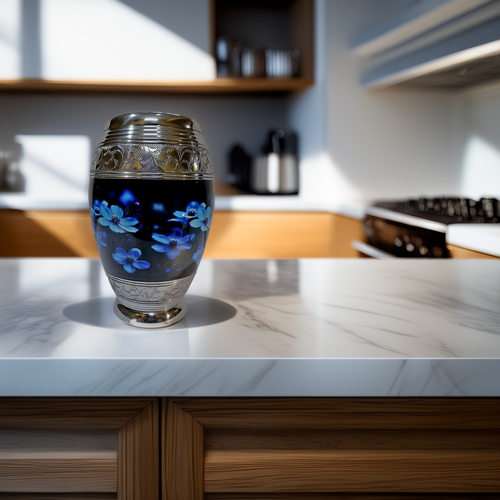
Once the cremation is complete, the ashes are placed into a temporary container. However, if your family has chosen a specific urn for ashes, you can usually provide that directly to the funeral home or crematorium beforehand. Many families find it meaningful to select their own urn, one that reflects the personality, values, or beliefs of the person they are remembering.
Families choose cremation for many reasons. Cost is one factor, as cremation is generally less expensive than traditional burial. Others are drawn to the environmental values it can represent, or appreciate the flexibility it offers in terms of timing, location, and how and where a loved one is memorialised. Cultural background, personal preference, and simplicity also play a role for many people. You can find helpful consumer guidance through the Cremation Association of North America.
If you have any questions about what to expect, your funeral director is there to help. They should be able to walk you through every step clearly, honestly, and without any pressure.
Decisions You May Be Asked to Make
Once cremation has taken place, or while arrangements are still being made, there are several decisions you may be asked about. None of them need to feel rushed, and there are no wrong answers. What matters most is finding choices that feel right for your family.
Ceremony timing is one of the first things a funeral director may raise. Some families choose to hold a viewing or gathering before the cremation takes place. Others prefer a memorial service afterwards, sometimes weeks later, once distant family members can travel or the initial shock has settled. And some families choose direct cremation, where no formal service is held at the time. All of these are valid paths. If you are considering direct cremation, it can be worth gently asking yourself how you might feel about that choice a few months from now, when the grief has softened a little.
The temporary container is something many families are not aware of beforehand. After cremation, ashes are typically returned in a plain box or basic container provided by the funeral home. You are not obligated to keep them in this. Supplying your own urn for ashes is a genuine and widely exercised choice, and the Funeral Consumers Alliance encourages families to make decisions based on their own preferences and budget rather than feeling guided toward any particular option.
Where the ashes will ultimately rest is a deeply personal decision, and one you do not need to make immediately. Some families keep an urn at home. Others inter ashes in a columbarium niche at a cemetery or memorial garden. Scattering at a meaningful location, such as a favourite landscape or stretch of coastline, is another path many choose, though it is worth checking any local permissions that may apply. Some families divide ashes among relatives using smaller keepsake urns, so that more than one person can hold a meaningful connection.
Personalisation is increasingly part of how families create lasting memorials. Engraving a name, date, or short inscription on an urn can transform it into something truly individual. The material and style of the urn matters too, whether that is a handcrafted wooden piece, a ceramic design, or something more contemporary. Cremation jewellery is another option worth knowing about; small pendants or rings that hold a tiny portion of ashes allow close family members to carry that connection with them in a quiet and personal way.
Finally, and perhaps most importantly: timing is rarely as urgent as it can feel. Cremated remains are stable and can be kept safely at home for as long as your family needs. There is no legal requirement to make a permanent decision about an urn straight away. Taking time to choose something meaningful, rather than something hurried, is entirely reasonable and widely encouraged.
Can You Provide Your Own Urn to a Funeral Home?
The short answer is yes. In most countries, including the United States and Australia, you have the right to supply your own cremation urn, and funeral homes are generally required to accept it. In the US, this right is protected at the federal level under the FTC Funeral Rule, which means a funeral provider cannot refuse to use a family-supplied urn, nor can they charge a handling fee for doing so. The Funeral Consumers Alliance also confirms that families have the right to purchase only the goods and services they want, and to receive itemised pricing before committing to anything.
The most important practical factor to check before choosing an urn is capacity. A standard adult cremation typically produces between 150 and 250 cubic inches of ashes, which is roughly 2,400 to 4,100 cubic centimetres. As a general guide, it helps to choose an urn that meets or slightly exceeds the estimated volume for your loved one. Most product listings will clearly show the cubic inch capacity, so you can compare before purchasing.
It is worth reaching out to the funeral home early in the process to understand how they handle family-supplied urns. Some may ask for the urn to arrive before the cremation takes place, while others are happy to transfer the ashes afterward. Either way, a quick conversation with the funeral arranger can help everything go smoothly and give you peace of mind.
When choosing an urn, look for a secure closure method. Screw-top, threaded, or velvet-sealed closures are all widely accepted and help prevent any accidental spillage during handling or transport. This is especially important if the urn will be moved between locations.
Bringing your own urn is increasingly common, and there is nothing unusual about it. Many families simply want something more personal, more meaningful, or better suited to their budget than what a funeral home typically stocks. It is a quiet and dignified way to ensure the memorial reflects the person you are honouring.
Why Many Families Choose to Source Their Own Urn
Many funeral homes do carry urns, but their in-house selection is often limited to a small range of styles, typically a handful of traditional designs in standard materials. This makes practical sense for a funeral home, where merchandise is one part of a much broader service. But for families looking for something that truly reflects the person they have lost, a limited display cabinet can feel restrictive.
Sourcing independently opens up a much wider world of choice. You might be looking for something that honours a particular cultural or religious tradition. You might want a design that speaks to your loved one's connection to nature, or something quietly modern that suits a contemporary home. You might need a specific size or material. When you step outside the funeral home's catalogue, all of these possibilities become available to you.
For many families, the urn for ashes is not simply a container. It becomes a lasting object of remembrance, something that sits in the home and holds both the physical and the emotional. Choosing one that genuinely reflects who your loved one was, their personality, their faith, their sense of beauty, is itself a meaningful act. It is one of the ways that families find a sense of care and intention in the memorial process.
This shift toward personalised memorialisation is well-documented. Personalisation has been identified as the leading consumer expectation in the funeral and cremation market for 2025 and 2026, with families increasingly seeking products that carry real meaning rather than generic utility. The global funeral products and services market is valued at $99.1 billion in 2025 and projected to reach $158.3 billion by 2033, with personalisation named as a key driver alongside rising cremation rates. According to the 2025 NFDA Cremation and Burial Report, cremation is now chosen at historic rates, which naturally increases the number of families making independent decisions about urns.
Families who have chosen direct cremation often find that sourcing their own urn feels like a natural part of the process. Direct cremation is a simpler, more affordable option where cremation takes place without a formal funeral service beforehand. It allows families to plan a memorial in their own time and way. For many, selecting the urn independently is an important and comforting part of that.
Specialist online retailers offer something that a funeral home arrangement meeting simply cannot: the time and space to choose carefully. At Remembrance Haven, you will find detailed product specifications, ash capacity guidance, and a wide range of styles, with discreet worldwide shipping designed to make the process as gentle as possible.
How to Choose the Right Urn for Ashes
Once you have cremated remains in your care, choosing the right urn for ashes can feel like an unexpectedly complex decision. There is no need to rush, and there is no single right answer. The following guidance is here to help you think through the key considerations gently and clearly.
Start with size. The most widely used rule of thumb is one cubic inch of urn capacity per pound of body weight before cremation. For most adults, this means choosing an urn with a capacity of at least 180 to 220 cubic inches. Standard adult urns are generally designed with this range in mind, but it is always worth checking the listed capacity before purchasing. Confirming your loved one's approximate pre-cremation weight helps avoid the distressing experience of finding that an urn is too small.
Think about where the urn will rest. This shapes everything from material to shape to size. An urn displayed at home can reflect personal taste, interior style, or something meaningful about the person being remembered. If burial or placement in a columbarium niche is planned, it is worth checking with the cemetery or facility first, as some have specific size or material requirements. For families considering a scattering ceremony on water or in a garden, biodegradable urns are purpose-made for this and are growing quietly in popularity. The wooden urn segment alone is projected to grow at a CAGR of 5% through 2033, reflecting a genuine shift toward natural and eco-conscious memorialisation.
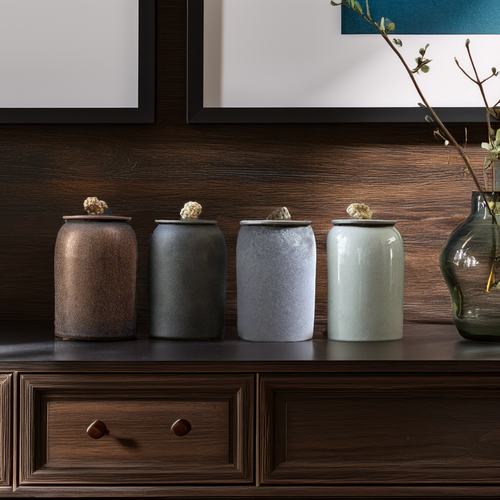
Material and style carry meaning as well as practical weight. Hand-crafted timber feels warm and grounded. Ceramic can be strikingly individual, especially in handmade forms. Brass and metal offer durability well-suited to burial or long-term display. Marble brings a timeless formality. Biodegradable materials, made from paper, salt, or natural plant fibres, are designed to return gently to the earth or water. There is no hierarchy here. The right material is simply the one that feels most fitting for your loved one and your family.
Keepsake urns are smaller vessels, each holding a portion of cremated remains, and they offer something genuinely meaningful for families spread across different cities or countries. Rather than one person holding all the ashes, several family members can each keep a small, beautifully made piece close to them. Many families choose a full-sized urn alongside one or more keepsakes.
Cremation jewellery takes this a step further, allowing a very small amount of cremated remains to be held within a pendant, ring, or bracelet. It is an increasingly chosen way to carry a loved one through everyday life, and many families find it a deeply comforting option, whether alongside a full urn or on its own. A helpful overview of how to choose a cremation urn can support you in thinking through all of these options at your own pace.
Working With Your Funeral Home: Practical Tips
At your first meeting with a funeral director, ask for a written price list before anything else. In many countries, including the United States, providing this list is a legal requirement under consumer protection regulations. Having it in hand means you can see clearly what is included in any package and what is an optional extra, so nothing comes as a surprise later.
If you plan to bring your own urn for ashes, let the funeral home know as early as you can. Most funeral homes have a simple, straightforward process for receiving and storing a family-supplied urn, and notifying them early gives everyone time to prepare without adding stress to the arrangements. Under US law, funeral homes cannot refuse a family-supplied urn or charge an additional handling fee for using it.
You are never obligated to purchase everything that is offered to you. It is entirely reasonable to take time, ask whether alternatives exist, or choose to source certain items, such as the cremation urn, independently. The Funeral Consumers Alliance notes that informed, selective planning can reduce costs significantly, sometimes by as much as half.
If you are feeling overwhelmed, please know that you do not have to face these meetings alone. Bringing a trusted friend or family member with you is completely appropriate. You can also ask the funeral director to follow up in writing rather than expecting decisions on the spot. Most funeral professionals understand this and will accommodate the request without hesitation. For further guidance, this resource on what to expect at an arrangement meeting can help you feel more prepared.
Many funeral homes now offer online arrangements and virtual consultations, making the process more accessible if travelling or attending in person feels difficult. Memorial Planning's guidance on questions to ask your funeral director is a helpful starting point for preparing before any conversation takes place.
There Is No Single Right Way to Say Goodbye
Grief does not follow a schedule, and there is no deadline for making decisions that feel truly meaningful. You are allowed to take the time you need. The process of honouring someone you love is deeply personal, and what matters most is that the choices you make feel right for your family, not that they happen quickly.
A funeral home plays a genuinely important role in the practical and logistical side of what follows a death. But the decisions around how a person is remembered, what sits on the mantelpiece, what a family member carries close to their heart, those belong entirely to you.
Choosing your own urn for ashes is one of the most personal ways to take an active part in that remembrance. Whether you are drawn to a full-sized adult urn, a set of keepsake urns to share among family members, or a piece of cremation jewellery that can be worn every day, each option carries its own quiet significance.
If you are unsure where to begin, Remembrance Haven offers detailed guidance on sizes, materials, and styles, alongside compassionate support to help you find something that feels genuinely right.
Whatever you choose, there is no wrong answer. The only measure that matters is meaning.
Conclusion
Navigating the funeral process does not have to feel overwhelming. By understanding what funeral homes do, knowing which questions to ask, and familiarizing yourself with how the process works from start to finish, you can make thoughtful decisions during one of life's most difficult moments.
The right funeral home will guide you with compassion, transparency, and respect. You deserve to feel informed and supported every step of the way.
If you are currently supporting a grieving family or planning ahead for your own wishes, take the next step today. Reach out to a local funeral home for a consultation, or use this guide as a reference when the time comes.
Grief is hard enough on its own. Having the right knowledge and the right people by your side can make all the difference.