Ignorer et passer au contenu

Losing someone you love is one of life's most difficult experiences, and the decisions that follow can feel overwhelming. Choosing the right cremation urns for human ashes is one of those decisions, and it deserves careful thought and clear guidance.
Whether you are navigating this process for the first time or helping a family member through it, understanding your options makes a meaningful difference. The cremation urn you select becomes a lasting tribute to someone's life, and there is no shortage of styles, materials, and price points to consider. Without proper guidance, the choices can feel confusing and emotionally exhausting.
This complete buying guide is designed to walk you through everything you need to know. You will learn how to choose the right size, understand the different materials available, explore various styles that honor your loved one's personality, and find options that fit your budget. By the end of this guide, you will feel confident and informed, ready to make a decision that brings comfort and peace of mind during a difficult time. Let's get started.
What Is a Cremation Urn?
A cremation urn is a vessel designed specifically to hold the cremated remains of a person who has passed away. It is a purpose-built container, crafted with appropriate capacity, a secure closure, and materials suited to long-term care or a chosen final use such as burial, home display, or placement in a columbarium. This distinction matters: while technically any container could hold remains, a true cremation urn is designed with both practicality and meaning in mind, offering a dignified resting place that honours the life of someone deeply loved.
Understanding Cremated Remains
Cremated remains are commonly referred to as "ashes," though in reality they are a fine, granular material composed of processed bone fragments. The cremation process uses intense heat to reduce the body, and the resulting remains have a coarse, sandy texture rather than the soft powder the word "ash" might suggest. For an adult, remains typically weigh between three and nine pounds. A widely used industry guideline suggests approximately one cubic inch of urn capacity per pound of the person's body weight, meaning most adult urns are designed to hold around 200 cubic inches. Understanding this early can help make the selection process feel more manageable.
From Temporary Container to a Meaningful Tribute
When remains are returned to a family following cremation, particularly after direct cremation, they usually arrive in a basic temporary container: a plain plastic bag inside a simple plastic or cardboard box. This is a functional vessel only, not designed for lasting display or as a tribute. Many families choose to transfer their loved one's remains into a cremation urn that better reflects who that person was. This step is one of the most personal and meaningful parts of the memorial journey, and it is one this guide is here to support.
The Range of Urns Available
Cremation urns for human ashes are available across several thoughtful categories. Adult urns are full-sized vessels designed to hold the complete remains of one person. Companion urns are larger, created for two people to rest together. Keepsake urns hold only a small portion of remains, allowing families to share a memorial across multiple loved ones. Children's and infant urns are scaled with care and sensitivity for the loss of a young life. You can explore types of cremation urns and the materials used in their construction to begin understanding which category may feel right, and guidance on choosing the right urn size can help bring clarity to the practical side of the decision.
There is no urgency here. There is no deadline for choosing the right urn, and no single correct answer. This guide is simply here to walk alongside you, offering clear and steady information so that when you feel ready, you can make a choice that feels right for your family and truly reflects the person you are remembering.
Why Many Families Choose Their Own Urn
When a loved one is cremated, the remains are typically returned to the family in a very simple, temporary container. For most direct cremation services, this is a basic plastic or cardboard box, functional in purpose but not designed with remembrance in mind. It carries no symbolism, no beauty, and no sense of permanence. It is simply a vessel to transport the remains from the crematorium to the family.
This is the reality for a growing number of families. According to us-funerals.com, over 63% of American families chose cremation in 2025, and the vast majority of those were direct cremations. Direct cremation is a straightforward service that covers collection, paperwork, and the cremation itself, with remains returned to the family afterwards. It is a practical and affordable option, but it does not include a meaningful urn as part of the arrangement.
For many families, choosing their own urn becomes a quiet and deeply personal act. It is one of the few decisions that belongs entirely to you, taken at your own pace, separate from the urgency of the cremation itself. Selecting a vessel that reflects who your loved one was, or simply one that feels right to you, can be a gentle and meaningful way of continuing to care for them.
The practical reasons also matter. A temporary container is not designed for long-term storage, display in the home, placement in a columbarium, or burial. A purpose-made cremation urn offers a secure closure, durable construction, and the kind of dignified presentation that a temporary container cannot provide.
This decision is becoming more common worldwide. The 2025 NFDA Cremation and Burial Report projects the US cremation rate will reach 82.3% by 2045, and similar trends are reflected across the UK, Canada, Australia, and beyond. Many families approaching this decision today are doing so for the very first time, with no prior experience to draw on.
There is no single correct choice here. The right cremation urn is simply the one that feels meaningful to your family and fitting for the memory of the person you are honouring. Whether that means something traditional, something personal, or something quietly simple, the decision belongs to you.
How to Choose the Right Size Cremation Urn
One of the most practical questions families face when choosing a cremation urn is simply: what size do I need? The good news is that there is a clear, widely used guideline that makes this straightforward to work out.
The standard rule used across the industry is this: approximately one cubic inch of urn capacity is needed for every pound of the person's body weight before cremation. So if your loved one weighed 150 pounds, you would typically need an urn with a capacity of at least 150 cubic inches. This guideline applies regardless of urn material or style, and it gives families a reliable starting point when comparing products. If you are working in metric measurements, a simple way to convert is to remember that one kilogram is approximately 2.2 pounds, and one cubic inch is approximately 16.4 millilitres.
Standard Adult Urns
A standard adult cremation urn is designed with a capacity of around 200 cubic inches, which comfortably accommodates the remains of most adults. This is deliberately generous, and it is the most commonly purchased urn size for good reason. Because the average adult weighs well under 200 pounds, a standard urn provides a natural safety margin for most families without requiring any additional sizing considerations. If you are unsure of the exact weight, a standard adult urn is usually a safe and appropriate choice.
Extra-Large and Companion Urns
For individuals who were above average body weight, an extra-large urn may be more suitable. These urns typically offer capacities of 250 cubic inches or more, ensuring the remains are accommodated with care and without concern.
A companion urn serves a different purpose entirely. These urns are designed to hold the remains of two people, and they are most often chosen by couples who wish to be together in their final resting place. Companion urns generally offer a capacity of 400 cubic inches or above to allow for two full sets of remains.
Keepsake Urns
Keepsake urns are much smaller vessels, holding only a symbolic portion of ashes rather than a complete set of remains. They are often chosen when families wish to share remains among several loved ones, or when one family member would like a personal keepsake alongside a primary urn. Keepsake urn capacities typically range from just a few cubic inches up to around 50 cubic inches. They are available in every material and style, including cremation jewellery such as pendants and bracelets that hold only a trace amount of ash. You can find detailed guidance on sizing categories in resources such as this simple guide to choosing the right size cremation urn.
If You Are Unsure
It is completely normal to feel uncertain about sizing, especially during such a difficult time. A gentle reassurance worth holding onto: an urn does not need to be filled completely. Cremated remains are returned inside a sealed bag that sits inside the urn, so choosing a slightly larger urn creates no practical issue whatsoever. Reputable urn suppliers list the cubic inch capacity clearly on every product, making it easy to verify before you purchase. When in doubt, sizing up is always the safer and wiser approach.
Cremation Urn Materials: What to Know Before You Choose
Once you have chosen the right size urn, the next important decision is material. The material affects how an urn looks and feels, but it also determines where and how it can be used. Some materials are suited to home display; others are designed for burial, water scattering, or green memorials. Taking a little time to understand your options can help you choose something that feels genuinely right for your loved one.
Metal and Brass Urns
Brass urns are among the most widely chosen options, and it is easy to understand why. They are exceptionally durable, resistant to corrosion, and built to last for generations. Their solid weight gives a sense of permanence that many families find comforting. Brass urns are well suited to both home display and in-ground burial, and they often feature engraved details, ornate patterns, or traditional motifs that make them feel timeless and dignified.
Wood Urns
Wooden urns carry a natural warmth that appeals to families who value craftsmanship and organic beauty. Hardwoods such as walnut, oak, and mahogany are commonly used, and the grain of the wood makes each piece quietly individual. Wood urns are a good choice for home display and often accept personalised engraving beautifully. Burial suitability depends on the finish and any protective treatments applied, so it is worth reviewing the product specifications carefully before making a decision.
Ceramic and Porcelain Urns
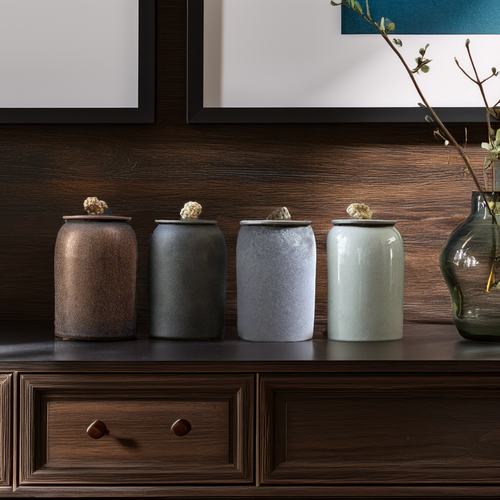
Handcrafted ceramic and porcelain urns offer an artisan quality that sets them apart. They are available in a wide range of colours, textures, and sculptural forms, making them a meaningful choice for families who want something distinctive. Because ceramic can be fragile, these urns are best placed somewhere safe and secure within the home. They are generally not recommended for in-ground burial unless the product is specifically described as burial-appropriate, so checking the listing details is always advisable.
Glass Urns
Glass urns, often mouth-blown or fused by skilled artisans, are visually striking in a way few other materials can match. No two pieces are exactly alike, and that subtle uniqueness can carry real meaning. Glass urns are best suited to home display and are not designed for burial or outdoor scattering use. If you are drawn to a glass urn, placing it somewhere it can be appreciated and kept safe will allow it to fulfil its purpose beautifully.
Marble and Stone Urns
Marble and stone urns are a classic choice for families who value permanence and traditional elegance. Their natural weight makes them very stable for long-term home display, and some marble urns are suitable for burial. It is worth noting that marble and stone are not biodegradable, so they are not appropriate for green burial or water scattering. If you are considering a marble urn and the intended use involves burial, checking cemetery requirements in advance is always a sensible step.
Biodegradable and Eco-Friendly Urns
For families with environmental values, or those planning a green burial or water scattering, biodegradable urns are specifically designed for that purpose. Made from materials such as compressed paper, natural salts, sand, or plant-based compounds, they are crafted to return to the earth gently and naturally. These urns are not intended for long-term home display, but for families who feel that a natural return is the most meaningful tribute, they offer a thoughtful and purposeful choice.
Resin Urns
Resin urns offer considerable versatility and are often crafted to reflect the appearance of stone, marble, or ceramic. They can be beautifully detailed and are well suited to home display. Resin is also typically lighter than natural stone, which some families find more practical. As with other materials, burial suitability varies between individual products, so reviewing the specifications before purchasing is recommended.
Understanding the properties of each material helps you match your choice to both your loved one's personality and your intended memorial plans. A helpful overview of material considerations can be found in this guide to choosing a cremation urn. If you are still unsure, thinking about where the urn will ultimately rest is often the clearest starting point.
Styles and Designs: Finding What Feels Right
Once you have a sense of the size and material that feels right, the next step is finding a style that truly reflects who your loved one was. There is no single correct choice here. The right urn is simply the one that feels meaningful to you and your family.
Traditional Urns
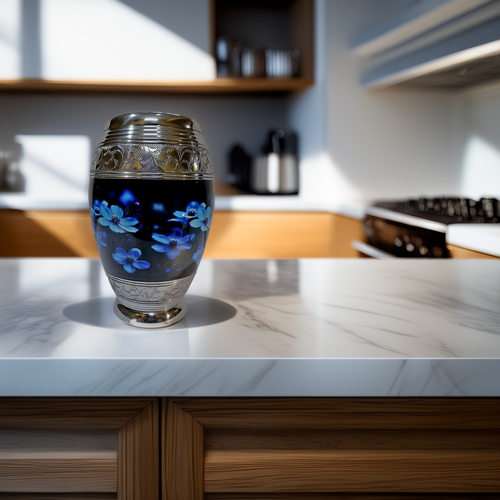
Traditional urns remain one of the most widely chosen styles, and for good reason. Their classic vase or jar forms carry a quiet sense of dignity that has endured across cultures and generations. Crafted in materials such as brass, bronze, or marble, they often feature understated or ornate detailing, from smooth polished surfaces to hand-engraved floral patterns. This timeless quality means they sit comfortably in many different homes and honour many different family traditions. For families who want something familiar and dignified, a traditional urn offers a sense of solidity and permanence.
Religious and Symbolic Urns
For families whose faith or spiritual beliefs are central to how they grieve and remember, urns featuring crosses, doves, angels, or other faith-inspired imagery can bring genuine comfort. These designs are created with care and respect, and they serve as a gentle, visible expression of belief. Choosing an urn that reflects your loved one's faith can feel like an extension of the memorial service itself, a way of keeping their spiritual life present and honoured.
Nature-Inspired and Thematic Urns
Many families choose to honour a loved one's connection to the natural world, or to something they were passionate about in life. Designs featuring trees, birds, oceans, celestial motifs, or landscapes allow for a deeply personal tribute. These urns speak to who someone was, not just the fact that they are gone.
Modern Minimalist Urns
Clean lines, simple forms, and contemporary finishes appeal to families who prefer quiet elegance. Minimalist urns integrate naturally into a home environment without drawing attention, offering a sense of closeness that feels private and gentle.
Personalised Urns
Many urns can be engraved with a name, a date, or a short inscription. This single addition transforms a beautiful object into something uniquely theirs. Personalisation is available across many materials and styles, and it is one of the most meaningful choices a family can make when selecting a cremation urn for human ashes.
Keepsake Urns and Memorial Jewellery: Sharing Remembrance
Not every family wants a single urn placed in a single location. Sometimes, several people need to feel close to the same person. Sometimes, family members live far apart. Sometimes, a brother and a sister, or a parent and an adult child, simply each want something of their own to hold. This is where keepsake urns and memorial jewellery offer something genuinely meaningful.
What Are Keepsake Urns?
Keepsake urns are small urns designed to hold only a portion of cremated remains, rather than the full volume. They are purpose-built for this role, with secure closures and appropriate sizing, and they are often made to match or complement a primary urn. A single cremation typically produces between 150 and 200 cubic inches of remains, which is more than enough to fill a primary urn and still provide meaningful portions for several people. Keepsake urns are available in a wide range of materials and styles, from simple and understated to beautifully crafted, so each person can choose something that feels right for them.
Dividing Ashes: A Personal and Legal Choice
Many families wonder whether it is acceptable, or even legal, to divide ashes among family members. In most countries, including the United States, the United Kingdom, Australia, and Canada, there are no legal restrictions on dividing or distributing cremated remains among family members, although it is always worth checking the specific rules in your country or region if you are unsure. Beyond legality, the decision is entirely personal. There is no obligation to keep remains together, and there is no tradition that must be followed. Research from scattering-ashes.co.uk suggests that as many as one in five households currently hold cremated remains at home, which reflects just how common and accepted it has become to keep and share ashes in ways that feel right for each family.
Cremation Jewellery: Carrying Someone Close
Cremation jewellery offers a deeply personal way to keep a loved one near. Pendants, rings, and bracelets are crafted with a small sealed compartment that holds a tiny amount of ashes, typically around one-eighth of a teaspoon or less. Once sealed, the piece is worn exactly like conventional jewellery, with no visible sign of its contents unless the wearer chooses to share that. Styles range widely across metals, stones, finishes, and designs, including dedicated options for men and for children. Understanding why people wear cremation jewellery often comes down to something simple: the comfort of physical closeness, and the quiet reassurance of having someone with you throughout the day.
Glass and Handcrafted Memorial Keepsakes
Another beautiful option involves handcrafted glass objects, such as orbs, hearts, and paperweights, made with a small amount of ashes incorporated into the glass during the crafting process itself. Because each piece is shaped and fused by hand, no two are exactly alike, and the result is a lasting, unique object of remembrance that can live in the home without feeling out of place. These pieces tend to sit alongside books, on window ledges, or in spaces where someone is often quietly remembered.
There Is No Right or Wrong Way
It is worth saying clearly: choosing a keepsake urn or a piece of memorial jewellery alongside a primary urn is not unusual at all. Many families do exactly this. As memorials.com notes in their cremation jewellery guide, the two options are not mutually exclusive, and different members of the same family may find that different things feel right for them. Some people want something to display. Others want something to wear. Others want both. Families do not divide ashes equally by volume; they divide them by meaning. Whatever combination of remembrance feels most true to your loved one and most comforting to those who loved them is the right choice.
Thinking About Intended Use: Home, Burial, or Scattering
One of the most helpful questions to ask early in your search is simply: what will happen to the ashes after cremation? The answer shapes almost every other decision, from material and size to closure type and finish.
Keeping the Urn at Home
Many families choose to keep a loved one's ashes at home, either permanently or until a later memorial decision is made. For long-term home display, the most important factors are durability, a secure closure that will not loosen over time, and a design that feels at home in your living space. Metal, ceramic, marble, glass, and resin urns all suit this purpose well. Each brings a different quality: marble feels timeless and substantial, glass can be quietly beautiful, metal tends to be highly durable. The right choice is the one that feels like a fitting reflection of the person you are remembering.
Ground Burial
Not all urns are designed for in-ground interment. If burial is planned, look specifically for urns described as burial-suitable in the product details. Metal, natural wood, and biodegradable urns are all commonly used for this purpose. It is also worth contacting the chosen cemetery in advance, as some require the urn to be placed inside a protective burial vault or liner. Requirements vary by location, so checking directly with the cemetery before purchasing will help you avoid any complications.
Water Burial and Sea Scattering
For families who wish to place ashes into water, biodegradable urns are purpose-built for this use. Made from natural salts, compacted sand, or plant-based materials, they dissolve gradually and gently once placed in water. It is important to check the regulations in your country or region before scattering at sea, as rules vary considerably. Many governments provide guidance on this; in the United States, for example, the Environmental Protection Agency sets specific requirements for sea scattering.
Land Scattering Ceremonies
Some families hold a meaningful ceremony to scatter ashes in a special location. A dedicated scattering tube, which is a simple cylindrical container, makes this process easier and more dignified than using a standard urn. A thoughtful option many families choose is to scatter a portion of the ashes at a meaningful place while keeping the remainder in a permanent urn at home, combining a ceremonial farewell with an enduring place of remembrance.
Columbarium Niching
A columbarium is a structure, often found at cemeteries or memorial gardens, that houses urns in individual niches. If this is the intended placement, measure the niche dimensions before purchasing an urn. Niche sizes vary considerably, and some facilities also have restrictions on certain materials or finishes. Confirming these details with the cemetery or memorial garden first ensures the urn you choose will be a perfect fit, both practically and in spirit.
For a broader overview of how intended use, size, and material all connect, this complete guide to choosing a cremation urn offers helpful additional context.
Cultural and Religious Considerations
Every family is different, and so is the way each family understands death, remembrance, and what it means to care for someone after they have gone. Attitudes toward cremation and the memorialisation of remains vary widely across cultures, faiths, and generations. What feels deeply right for one family may feel unfamiliar or even uncomfortable for another, and every approach deserves the same quiet respect.
How Different Traditions Approach Cremation
Cremation is embraced within a number of the world's major traditions. In Hinduism, cremation is considered spiritually essential; the practice is believed to help release the soul and support its journey forward. In Buddhism, cremation reflects the philosophical principle of impermanence and is widely practised across many regional customs. Many strands of Christianity accept cremation as a personal choice, and the Catholic Church now permits it under certain conditions, though ashes are generally expected to be buried or entombed rather than scattered. Sikhism also broadly accepts cremation, and secular or non-religious families increasingly choose it for deeply personal reasons, whether practical, environmental, or simply because it feels right for them.
Some traditions do maintain specific guidance. Orthodox Judaism and Islam, for example, both emphasise burial as the appropriate form of final disposition. If you have any questions about what is appropriate within your own faith or cultural community, speaking with a faith leader or community elder can offer reassurance and clarity. A general overview of how different world religions view cremation may also be a helpful starting point.
Choosing an Urn That Reflects Your Tradition
Remembrance Haven's range includes designs that speak to many different backgrounds and values, from urns bearing religious and symbolic imagery to entirely neutral, contemporary forms that carry meaning simply through their beauty and craftsmanship. Whatever your tradition or personal preference, there is likely something here that will feel fitting.
For families observing customs around timing, such as traditions where memorialisation ideally takes place within a specific period following a death, delivery timelines matter. Always check individual product pages for current availability and estimated dispatch and shipping times before placing an order.
Above all, there is no single correct way to honour someone you love. The most important measure of any choice is whether it brings comfort, meaning, and a sense of peace to the people who are carrying this loss.
What to Look for When Buying a Cremation Urn Online
When you are ready to search for a cremation urn online, knowing what to look for in a product listing can save you from unnecessary stress later. A well-written listing should give you confidence before you purchase. Here are the five most important things to check.
Capacity Specifications
Every urn listing should clearly state its internal volume, expressed in cubic inches or litres. This is the single most important piece of practical information on the page. If a listing does not include this figure, contact the supplier directly before placing an order. As covered earlier in this guide, the standard guideline is approximately one cubic inch of capacity per pound of body weight, so a 160-pound adult would require an urn of at least 160 cubic inches. Purchasing an undersized urn is one of the most distressing and avoidable mistakes families make.
Closure and Sealing Details
A good product description will explain exactly how the urn closes and how secure that closure is. Common options include threaded lids that screw firmly into place, bottom-panel access secured with screws, and interior-fitted designs with a velvet-lined chamber and a sealed top. Do not assume that a lid is secure based on a photograph alone. If the closure method is not described, ask. This is especially important if the urn will be transported, buried, or placed within a columbarium niche.
Materials, Finishes, and Intended Use
The listing should clearly identify the material, describe any surface treatments or decorative finishes, and confirm whether the urn is suitable for home display, ground burial, or water placement. These are distinct requirements with different material implications, and a trustworthy supplier will address them directly.
Personalisation Options and Lead Times
If you wish to add a name, date, or inscription, verify on the specific product page whether engraving is available for that item, what formats are supported, and how much additional time is needed. Personalised urns typically take longer to dispatch than standard stock items, which matters when timing is a consideration.
Supplier Policies and Support
Before completing your purchase, review the supplier's dispatch timelines, packaging approach, and returns policy. Reputable suppliers ship using discreet packaging with no visible exterior branding or product descriptions. Look for a clear way to get in touch, whether by phone, email, or live chat, in case questions arise after ordering. Confidence in the process matters as much as confidence in the product.
A Final Word: There Is No Perfect Choice, Only a Meaningful One
There are four things that matter when choosing a cremation urn for human ashes: size, material, style, and how the urn will be used. Size should be guided by body weight, with approximately one cubic inch of capacity needed for each pound. Material should match where the urn will rest, whether at home, in the ground, or at a scattering site. Style should reflect the person you are honouring and bring some measure of comfort to those who loved them. And intended use, whether home display, burial, scattering, or sharing among family, shapes every other decision that follows.
But beyond these practical considerations, there is something more important to hold onto: there is no single right answer here. The most meaningful urn is simply the one that feels right to the people who loved the person it is for. Grief makes decisions harder, and that is completely understandable. You do not need to rush, and you do not need to be certain. Choosing with love and care is enough.
At Remembrance Haven, you are welcome to explore our full range of cremation urns for human ashes at your own pace, with no pressure. The collection includes adult urns, keepsake urns, companion urns, and memorial jewellery, each with detailed specifications to help you make an informed and confident choice.
Taking the time to find something meaningful is itself an act of love. It is a quiet, steady form of remembrance, and it matters.
Conclusion
Choosing the right cremation urn is a deeply personal decision, but it does not have to be an overwhelming one. By focusing on four key factors, size, material, style, and budget, you can find an urn that truly honors your loved one's memory. Remember that there is no single "right" choice; the best urn is the one that feels meaningful to you and your family. Taking your time, setting a realistic budget, and considering how and where the urn will be displayed will guide you toward a decision you can feel at peace with.
You now have the knowledge and confidence to move forward. Browse trusted retailers, compare your options, and trust your instincts. This final tribute deserves thoughtful care, and you are fully equipped to give it exactly that.