Ignorer et passer au contenu

Losing someone you love is one of life's most difficult experiences, and navigating the decisions that follow can feel completely overwhelming. If you're here, you might be trying to figure out what comes next, and that's perfectly okay. You don't need to have all the answers right now.
One of the choices many families face is selecting a cremation urn, and if you're not sure where to start, you're in good company. Most people have never had to think about this before, and the sheer number of options out there can feel confusing at first glance.
That's exactly why we put together this gentle, easy-to-follow guide. By the time you finish reading, you'll have a clear understanding of what a cremation urn is, the different types available, how to choose the right size, and what materials are commonly used. We'll walk through everything in simple, straightforward terms so you can feel confident and informed when making this meaningful decision. Think of this as a friendly conversation, not a lecture. We're here to help you every step of the way.
What Is a Cremation Urn?
A cremation urn is a container designed to hold the ashes of a loved one or pet who has been cremated. You may also hear cremated remains referred to as "cremains" — both terms mean exactly the same thing, and either is perfectly appropriate to use. At its heart, an urn is a vessel of care, created specifically to hold and protect what remains after cremation.
Urns serve two important purposes. On a practical level, they provide a safe, secure, and dignified place for cremated remains to rest. On a deeper level, they carry enormous symbolic meaning. For many families, a cremation urn becomes a focal point for remembrance, a tangible connection to someone deeply loved. Unlike a coffin or casket, which is selected and used before or during a funeral service, a cremation urn is typically chosen afterwards, by the family. This means the choice is yours, made in your own time, guided by what feels right.
It is also worth knowing that keeping ashes in an urn at home is just one of many options available to you. Families may choose to bury an urn in the ground, place it in a columbarium niche, scatter the ashes in a meaningful location, or divide them among several loved ones using smaller keepsake urns. There is no single correct path, and many families find comfort in knowing they can take their time deciding.
The urn itself is far from a modern invention. The history of cremation urns stretches back thousands of years, with evidence of cremation practices dating to around 3,000 BC. Across ancient Europe, Asia, and beyond, cultures have long used vessels to honour their dead. This long history reflects something deeply human — the universal need to treat those we have lost with dignity and reverence. That need is as meaningful today as it has ever been.
Cremation as a Global Practice
If you are facing the decision to choose cremation, it may help to know that you are far from alone. Cremation has become the most common end-of-life practice across much of the world. According to cremation rate data compiled by World Population Review, the worldwide average cremation rate reached 61.9% in 2024, meaning that for the first time in modern history, more families globally are choosing cremation than any other form of disposition. That is a quiet but significant shift, and it reflects how deeply this choice has woven itself into communities, cultures, and families of every kind.
In Australia, cremation rates have risen steadily over recent decades and now represent the clear majority of dispositions. This mirrors a broader trend seen across the English-speaking world, where changing attitudes, practical considerations, and personal values have all contributed to cremation becoming a mainstream, widely accepted choice.
Across North America, the picture is similar. The US cremation rate stood at 61.8% in 2024 and is projected to reach 70% by 2033. Canada is already well ahead at 76.7%, reflecting how quickly this shift can unfold within a generation. In the UK, the rate sits at 79.83%, while Denmark leads Europe at 86.82%. Across Asia, cremation has long been the norm. Japan's cremation rate is 99.97%, Hong Kong's is 96.96%, and South Korea's stands at 90.48%.
You can explore international cremation statistics further through the Cremation Association of North America, which tracks industry data across multiple countries.
The decisions you are facing right now are deeply personal. But knowing that millions of families around the world navigate this same path each year, across every culture and tradition, may offer a small measure of steadiness during a difficult time.
Types of Cremation Urns
One of the most helpful things you can do right now is simply understand what options exist. Cremation urns come in several distinct types, each serving a different purpose and a different kind of loss. There is no single "right" choice, only the one that feels most fitting for your loved one and your family.
Adult Urns
Adult urns are the most common type and are designed to hold the full volume of cremated remains from an adult. A standard adult urn typically holds around 200 cubic inches of ashes, which is enough for most adults. You will find them crafted from a wide range of materials, including wood, metal, ceramic, marble, glass, and biodegradable composites. Styles range from classic and traditional to religious, nature-inspired, and quietly modern. This variety means you can choose something that genuinely reflects who your loved one was, rather than settling for something that feels impersonal.

Keepsake Urns
Keepsake urns are smaller containers designed to hold just a portion of the ashes. They are a meaningful option when several family members would each like to keep something close. A typical keepsake urn holds anywhere from a small pinch of ashes up to around 50 cubic inches, making them easy to display at home, carry with you, or place somewhere special. Choosing keepsake urns alongside a primary urn allows a family to share in remembrance without anyone feeling left out.
Children's and Infant Urns
Losing a child or infant is one of the most profound losses a person can face, and choosing an urn for that loss deserves particular gentleness. Children's and infant urns are sized appropriately for smaller volumes of cremated remains, and they are crafted with care and tenderness in their design. Many families find that soft, delicate designs, whether shaped like animals, angels, or simple peaceful forms, offer a small measure of comfort during an unimaginably difficult time.

Pet Urns
Pets are family, and the loss of a companion animal deserves the same thoughtful care. Pet urns mirror their human counterparts in purpose but are sized to suit animals of different sizes, from small cats and rabbits through to larger dog breeds. Many designs reflect the warmth and personality of the animals we love, making it possible to honour them in a way that feels truly fitting.
Companion Urns
Companion urns are designed to hold the ashes of two people, most often a couple. They typically hold around 400 cubic inches in total, and some include an internal divider while others allow the ashes to rest together. For those who shared a life and wish to remain together, a companion urn can be a deeply meaningful choice.
Biodegradable and Eco-Friendly Urns
For families drawn to a more natural farewell, biodegradable urns offer a gentle alternative. Made from natural materials such as salt, sand, paper, or plant fibres, these urns are designed for water burial, green burial, or scattering. They dissolve or break down naturally over time, returning the remains softly to the earth or sea. This option resonates with many families who shared a love of nature with the person they have lost, and it is an increasingly popular choice worldwide.
Understanding these different types is a good starting point. In the sections ahead, we will look more closely at how to choose the right size and material for your needs.
Cremation Urn Materials: What to Consider
Once you understand the different types of cremation urns available, the next natural question is what they should be made from. Material affects how an urn looks, how it feels, how durable it is, and where it can be placed. There is no single right answer here. The best material is simply the one that feels most meaningful and appropriate for your situation.
Metal Urns
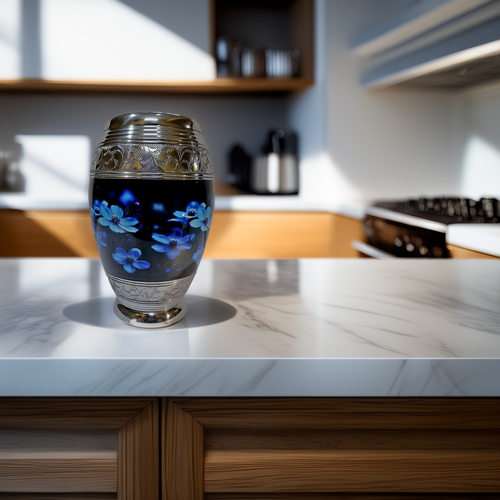
Metal urns are among the most widely chosen options, and it is easy to understand why. Made from materials such as brass, aluminium, or stainless steel, they are robust, secure, and built to last. They are available in a wide range of finishes, from polished and engraved to brushed or painted, so there is genuine variety in how they look. Metal urns are suitable for both home display and burial or interment, making them a versatile choice for families who are still deciding on a final resting place.
Wooden Urns
Wooden urns have a warmth and naturalness that many families find deeply comforting. They are often hand-crafted from hardwoods such as cherry, walnut, or oak, giving each piece a slightly individual character. If your loved one had a connection to nature, or if you are drawn to a more traditional, tactile aesthetic, a wooden urn may feel like a fitting tribute. They are primarily suited to indoor display and home keeping.
Ceramic and Porcelain Urns
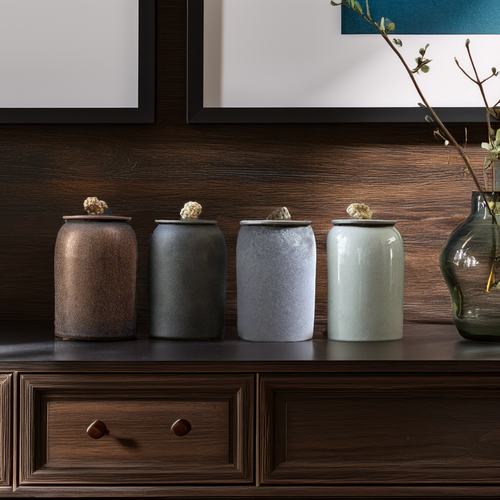
Ceramic and porcelain urns offer a decorative quality that sets them apart. They can be made in a wide variety of shapes, sizes, and designs, and intricate glazes allow for truly beautiful finishes. Many families choose ceramic urns specifically because they feel like objects of art, worthy of a place of honour in the home. It is worth noting that ceramic is more fragile than metal or stone, so placement in a safe, stable spot is important.
Stone and Marble Urns
There is a solemnity to stone and marble that many people find fitting for remembrance. These urns are heavy, which itself communicates permanence. They are highly durable and well-suited to burial, columbarium placement, or any memorial setting where longevity matters. If you are considering a columbarium niche, it is worth checking the dimensions required before purchasing, as space restrictions can vary.
Glass Urns
Hand-blown glass urns are visually striking in a way that is quite unlike any other material. Each one is essentially a unique piece of art, and the way light passes through them can be genuinely beautiful. They are best suited to home display rather than burial or outdoor settings. For families who want to honour their loved one with something that carries real artistic meaning, glass is a deeply personal choice.
Biodegradable Urns
Biodegradable urns are designed to return to the earth naturally, making them the preferred choice for families who value environmental sustainability. They are typically made from materials such as recycled paper, natural resins, salt, or compressed plant matter, and are crafted to break down gently when buried in soil or placed in water. This option is becoming increasingly popular and is particularly well-suited to garden memorials or water scattering services. You can find helpful guidance on how to choose a cremation urn that covers biodegradable options in more detail.
Taking your time with this decision is perfectly reasonable. Each material carries its own meaning, and the right choice is the one that truly reflects your loved one and what feels right for your family.
Choosing the Right Size: Understanding Ash Capacity
One of the most practical decisions you will face when choosing a cremation urn is making sure it is the right size. This can feel like an unexpectedly clinical task during an emotional time, but the guidance is straightforward once you understand how it works. Taking a few minutes with this now can save you from having to make a second decision later.
How Ash Volume Is Measured
Cremated remains are measured in cubic inches, and the industry uses a simple starting guideline: roughly one cubic inch of capacity for every pound of body weight before cremation. So if your loved one weighed around 150 pounds, you would typically expect approximately 150 cubic inches of cremated remains. This is a guideline rather than a precise formula, because factors such as bone density and the cremation process itself can cause some variation. It gives you a reliable starting point, though, and most families find it accurate enough for practical planning.
What Standard Adult Urns Hold
Most standard adult cremation urns are designed to hold between 180 and 220 cubic inches, with many centred around the 200 cubic inch mark. This range comfortably accommodates the majority of adults. A little extra space is also helpful for the practical process of transferring remains, so having that buffer built into a standard urn is genuinely reassuring.
If you are ever unsure, it is worth confirming the actual ash volume with your funeral home before ordering. They can give you a more precise figure, which removes any guesswork entirely.
If the Ashes Do Not Quite Fit
Occasionally, cremated remains may slightly exceed a chosen urn's capacity. If this happens, there is no need to feel distressed. You have gentle, meaningful options. Your funeral home can retain a small portion separately if needed. Alternatively, a companion urn, which is designed to hold the remains of two people, offers a larger capacity. Some families also choose to divide a small portion into keepsake urns, which hold just a token amount and can be shared among family members as a lasting connection to their loved one.
Children, Infants, and Pets
For children, infants, and beloved pets, capacity requirements are significantly smaller. The same basic guideline applies where the animal or child's pre-cremation weight is your starting reference point, but the volumes involved are far lower. Product listings for these categories will clearly specify the appropriate capacity, making selection straightforward.
Always Check the Specifications
Before purchasing any urn, always review the cubic inch capacity listed in the product specifications. External dimensions alone are not a reliable guide to interior volume. Two urns that look similar in photographs or even in physical size can hold very different amounts, depending on wall thickness, interior shape, and construction. The number that matters is always the stated internal capacity.
What Can You Do with a Cremation Urn?
Once you have chosen a cremation urn, one of the gentlest questions that follows is simply: what happens next? There is no single right answer, and no timeline you are expected to follow. Below are some of the most common paths families take, each one valid and personal in its own way.
Keeping the urn at home is perhaps the most common choice, and it is a perfectly complete one. Many families place the urn somewhere meaningful, a mantelpiece, a quiet corner of a favourite room, or beside a photograph, and find that having it nearby brings a sense of closeness and comfort. There is no legal requirement in most jurisdictions to make any further arrangement. For many people, this is not a temporary measure while they decide what to do next; it is simply what feels right, and that is more than enough.
Burial in the ground is another option for cremated remains. This might be a dedicated ashes plot within a cemetery, a space within an existing family grave, or a natural burial site where a biodegradable urn is placed in the earth. Having a fixed, visitable place can be deeply meaningful for families who want a traditional point of remembrance. Local regulations vary, so it is worth checking with your local authority or cemetery before making arrangements.
A columbarium niche offers a more formal resting place within a memorial wall or building. The urn is interred in a designated space that can be visited, often within a chapel, garden of remembrance, or outdoor memorial structure. This option is common across many countries and religious traditions, and provides a protected, lasting location for the urn.
Scattering ashes is a deeply personal choice, and one that many families find meaningful and freeing. Popular locations include the sea, open countryside, a garden of remembrance, or a place that held special significance. Laws around scattering vary considerably by country and region, so it is important to check local guidelines before making plans. The Cremation Association of North America provides a helpful overview of memorial options for families navigating these decisions.
Sharing ashes among family members using keepsake urns means that several people can each hold a small, physical connection to the person they have lost. Keepsake urns are smaller vessels designed to hold a portion of ashes, and they can be just as thoughtfully chosen as a full-sized urn. Cremation jewellery serves a similar purpose, holding a small amount of ash within a pendant, ring, or bracelet.

Finally, and perhaps most importantly: you do not need to decide anything right now. It is entirely common, and completely understandable, for families to keep ashes at home for months or even years while they grieve and gently consider what feels right. As AM Cremation and Funeral Care reassuringly notes, there is no rush and no wrong answer. Whatever you choose, and whenever you choose it, what matters most is that it feels meaningful to you and to those who loved them.
Cultural and Religious Considerations
Every family carries its own traditions, and when it comes to cremation, those traditions can shape nearly every decision you make, from the type of urn you choose to what happens with the ashes afterward. There is no universal way to honour a loved one, and that is something worth holding onto gently as you navigate this process.
Across the world, cremation is woven into cultural and religious life in very different ways. In many Asian traditions, including Hindu and Buddhist practices, cremation has been part of funeral ritual for thousands of years. In Hinduism, for example, ashes are often immersed in a sacred river as part of a ritual called Asthi Visarjan, which means the urn itself is typically a temporary vessel rather than a permanent memorial. In some Buddhist communities, ashes may be enshrined in a stupa or incorporated into a clay statue that is venerated over time. These traditions carry deep meaning, and the choice of urn can reflect that intention directly.
In contrast, some Western and Middle Eastern traditions have only recently become more open to cremation. Catholic teaching, for instance, now permits cremation but asks that remains be kept together and interred in consecrated ground rather than scattered or divided. Islam and Orthodox Judaism have historically favoured burial, and families from these backgrounds may be navigating particularly sensitive considerations.
This cultural and religious guide to choosing a cremation urn offers helpful background if you are exploring faith-specific urn choices.
If your own tradition has specific requirements around urn materials, markings, burial timelines, or how ashes should be handled, it is worth speaking with a religious leader, cultural advisor, or community organisation who knows your tradition well. They can offer guidance that is tailored to your family's needs in a way that general resources simply cannot.
Above all, no single approach is more meaningful or correct than another. The most important thing is that the choice feels right for the person being remembered, and for everyone who loved them.
Eco-Friendly and Biodegradable Urns
For many families, the choice of a cremation urn is also an opportunity to reflect the values their loved one held dear. If the person you are remembering cared deeply about the natural world, an eco-friendly or biodegradable urn may feel like the most honest and fitting tribute you can offer.
Biodegradable urns are crafted from natural materials such as recycled paper, compressed plant matter like bamboo or hemp, salt, sand-and-gelatin compounds, and natural resins. They are designed with a gentle purpose: to return the ashes to the earth or water over time, leaving nothing harmful behind. Some are shaped to float briefly on the surface of the water before dissolving, while others are intended to be placed in the ground, where they break down gradually as part of the natural cycle.
These urns are particularly well suited to two types of farewell. The first is a water burial, where the urn is placed into a lake, river, or the sea. The second is a green or natural burial, where the urn is interred in the ground at a dedicated natural burial site. If you are considering either of these options, it is worth checking local regulations in advance, as some regions have specific guidelines around water burials and permitted burial grounds. The Funeral Consumers Alliance offers a helpful overview of green burial options and what to expect.
It is also worth knowing that interest in eco-friendly memorial choices has grown significantly in recent years. According to data cited by cremation.green, the global biodegradable cremation urn market is projected to nearly double in value by 2032, reflecting how widely these values now resonate with families around the world. A survey from the National Funeral Directors Association found that 68% of people expressed interest in eco-friendly funeral options as of 2024, which suggests this is very much a mainstream consideration rather than a niche one.
One thing that is important to say clearly: a biodegradable urn is not a lesser choice. Many are designed with quiet beauty, natural textures, and genuine craftsmanship. They can be every bit as dignified and meaningful as an urn made from metal, wood, or ceramic. As noted by Wyuka Cemetery, eco-friendly burial options are increasingly recognised as a thoughtful and considered way to honour a life.
If living gently on the earth was something your loved one believed in, choosing a biodegradable urn can be a deeply personal and deeply meaningful way to say goodbye.
Buying a Cremation Urn Online: What to Look For
Buying a cremation urn online has become a genuinely practical and widely chosen path for families around the world. Compared to selecting an urn through a funeral home, shopping online offers a far broader range of styles, materials, and price points, along with the privacy to browse quietly at your own pace, from the comfort of your own home. There is no pressure, no time limit, and no one standing beside you while you make a deeply personal decision. For many families, that space to breathe makes all the difference.
When you begin browsing, look closely at the product information each retailer provides. A trustworthy urn retailer will clearly list the internal capacity in cubic inches, the external dimensions, the materials and finish, the closure type, and the overall weight of the urn. These details are not just technical formalities; they help you feel confident that the urn is right for your loved one before it arrives. If a product page is missing key specifications, particularly the internal capacity, it is worth pausing before purchasing. You can find helpful guidance on what to expect from product listings in this complete cremation urn buying guide.
Practical considerations matter too. Look for a retailer that offers secure checkout, discreet packaging, and tracked shipping. Because an urn carries such deep personal significance, knowing exactly where it is in transit brings real peace of mind. It is also worth checking that the retailer has a clear returns or exchange policy and that there is a straightforward way to reach a real person if you have questions. These are the hallmarks of a retailer you can trust, and trust matters more than price in this category above all others.
Please remember: there is no rush. Cremated remains are returned in a secure, temporary container, which means you have time to choose thoughtfully. The right urn is simply the one that feels meaningful to you.
At Remembrance Haven, every product listing includes full specifications, and worldwide shipping is available to support families wherever they are. Our team is here to help, gently and without pressure, whenever you need guidance.
There Is No Rush, Only What Feels Right
Choosing a cremation urn is one of the most personal decisions a family can make, and there is no single right way to approach it. Every family's circumstances, values, and timeline are different, and what matters most is that the choice feels right for you and for the person you are honouring.
There is also no urgency. The temporary container provided after cremation is safe for storage, and you are under no pressure to make a permanent decision before you feel ready. Take whatever time you need.
When you do feel ready to explore options, it can help to think gently through a few things: the type of urn that suits your intended use, the material that feels meaningful, and the size that will hold the ashes comfortably. If you are making this decision alongside other family members, working through this guide together and focusing on shared values can make the process feel less overwhelming.
Practical next steps might include reviewing the sizing guidance covered earlier in this guide, considering whether you are planning home display, burial, or scattering, and reaching out if any questions arise along the way.
At Remembrance Haven, we are here whenever you are ready, with honest information, clear guidance, and urns crafted with genuine care and dignity. There is no rush. Only what feels right for your family.
Conclusion
Choosing a cremation urn is a deeply personal decision, and you now have the knowledge to make it with confidence. To recap the key points covered in this guide: urns come in a wide range of materials, from wood and ceramic to biodegradable options; sizing matters and should reflect your intended use; and style choices can beautifully honor the personality of your loved one.
Most importantly, there is no single "right" answer. The right urn is simply the one that feels meaningful to you and your family.
When you feel ready, browse our full collection to explore options that speak to your heart. Our team is also here to help if you have questions along the way. You don't have to navigate this alone, and honoring someone you love deserves to feel as peaceful as possible.
Read next
- Cremation Urns for Human Ashes: A Complete Buying Guide – Discover key considerations and step-by-step advice for selecting the perfect final resting place.
- Cremation Urn Capacity: Your Complete Sizing Guide – Ensure a perfect fit with this simple guide to understanding urn measurements and capacities.
- Personalized Urns for Ashes: A Complete Guide – Learn how custom engravings and unique designs can turn a beautiful urn into a deeply personal tribute.