Skip to content

Losing someone you love is one of the hardest things any of us will ever go through. And when it comes to honouring their memory, the choices can feel overwhelming, emotional, and deeply personal all at once. That is where the phrase "ashes to ashes" often comes into our minds, carrying centuries of meaning, comfort, and tradition with it.
But what does it actually mean? And how can understanding it help you make thoughtful, meaningful decisions about a loved one's remains?
In this guide, we are going to walk you through everything you need to know. From the origins of "ashes to ashes" and its spiritual significance, to the many beautiful ways families are choosing to honour their loved ones today. Whether you are just beginning to think about cremation, planning a memorial service, or simply curious about the phrase itself, this post is written with you in mind.
No jargon, no complicated explanations. Just clear, compassionate guidance to help you feel more confident and informed during what can be a truly tender time.
The Meaning Behind "Ashes to Ashes"
Few phrases carry as much quiet weight as "ashes to ashes, dust to dust." You may have heard these words at a funeral, read them in a poem, or felt their echo somewhere deep and wordless. Understanding where they come from, and what they truly mean, can offer a small but steadying sense of comfort during an incredibly difficult time.
Where the Words Come From
The phrase originates in the Anglican Book of Common Prayer, first published in 1549 and most widely recognised in its 1662 form. The burial service reads: "earth to earth, ashes to ashes, dust to dust; in sure and certain hope of the Resurrection to eternal life." These words draw directly from two passages in the Bible. Genesis 3:19 reminds us that we are formed from the earth and will one day return to it. Ecclesiastes 3:20 echoes the same truth: "All are of the dust, and all turn to dust again." Together, they form a gentle acknowledgement of what it means to be human.
A Message That Speaks Across Many Traditions
Although the phrase is rooted in Christian liturgy, its meaning reaches far beyond any single faith. The idea that the body returns to the earth after death is found across many spiritual and cultural traditions worldwide, including Jewish, Islamic, and Hindu teachings, as well as secular philosophies of nature and impermanence. Many people find comfort in this shared human understanding, regardless of their personal beliefs. It speaks to something universal: that life is precious, that loss is real, and that the physical world holds us all.
Why These Words Still Matter Today
With cremation now chosen by the majority of families in countries like the United States, Canada, and the United Kingdom, these words feel more relevant than ever. They sit gently alongside the reality of cremated remains, offering a poetic and dignified way to name what has happened. Whether spoken during a religious service or a quiet, secular gathering, the phrase creates a moment of stillness and meaning. It does not demand a particular belief. It simply invites reflection, remembrance, and a sense that even in loss, something enduring remains.
What Cremated Remains Actually Are
If you've never been through cremation before, it's completely natural to feel uncertain about what the process actually involves, or what you'll receive afterwards. Many families are surprised to learn that cremated remains are not soft, fluffy ash like you'd find in a fireplace. They are, in fact, processed bone fragments, ground to a fine, sand-like consistency.
Here's what happens during cremation. The body is placed in a cremation chamber and exposed to intense heat, typically between 1,400 and 1,800 degrees Fahrenheit, for one to three hours. Soft tissues, organs, and moisture are gently vaporised during this process. What remains are the bones, which are composed largely of calcium phosphate and are resilient enough to survive the heat. Once cooled, these bone fragments are carefully processed into a uniform, fine texture using a machine called a cremulator. The result has a coarse, pale grey or off-white appearance, similar in texture to coarse sand or fine gravel. You can read more about this process through the Cremation Association of North America, which offers clear, factual guidance for families.
In terms of weight, adult cremated remains typically fall somewhere between 3 and 9 pounds, with most adults in the 4 to 6 pound range. Factors like height, bone density, and skeletal frame play a role, rather than overall body weight or size. Taller individuals with larger frames tend to yield a little more. This is completely normal, and knowing this in advance can help ease any worry about what to expect.
Understanding the composition of cremated remains also helps when it comes to choosing urns for ashes. A standard adult urn is designed to hold around 200 cubic inches of remains, which comfortably accommodates most adults. Knowing the approximate weight and volume means you can choose with confidence, whether you're considering a full-sized urn, a keepsake urn to share among family members, or memorial jewellery that holds a small, meaningful portion.
The full breakdown of cremation ash composition from Living Legacy Forest is another gentle, informative resource if you'd like to understand this further before making any decisions.
There's no need to feel anxious about any of this. Cremation is carried out with strict care, dignity, and identification protocols at every stage. What families receive is a tangible, lasting reminder of their loved one, handled respectfully from beginning to end.
Why So Many Families Choose Cremation Today
Cremation has become the most common choice for end-of-life care in many parts of the world, and the numbers reflect just how much this has shifted in recent years. In the United States, the cremation rate reached 63.4% in 2025, more than double the traditional burial rate of 31.6%, according to the National Funeral Directors Association. In Canada, the figure was 76.7% in 2024, and the global average sits at approximately 61.9%, with some countries much higher. Japan, for example, has a near-universal cremation rate of around 99.97%, and the UK stands at approximately 79.83%.
These numbers tell a meaningful story. More and more families, across very different cultures and circumstances, are choosing cremation as a way to honour their loved ones.
So why do so many families choose this path?
For many, it comes down to flexibility. Cremation allows families to take their time, hold a memorial when the moment feels right, and keep or place the ashes in a way that feels personal. Geographically scattered families especially appreciate having options rather than being tied to a single location or date.
Cost is also a genuine consideration. Cremation is generally more affordable than traditional burial, which can ease some of the practical pressure during an already difficult time.
Environmental awareness plays a growing role too. Many people feel that cremation aligns more closely with their values around land use and ecological impact, and interest in biodegradable urns and natural memorials continues to grow.
It is worth saying clearly: choosing cremation is not a lesser form of saying goodbye. It is a deeply respected, widely practised, and profoundly personal choice, one that has been part of human culture across centuries and continents. The steady rise in cremation rates reflects not a move away from honouring the people we love, but a shift toward doing so in ways that feel true and meaningful to each family.
Whatever has brought you here, your choice to honour your loved one thoughtfully is what matters most.
Ways Families Choose to Honour Cremated Remains
Once you have received your loved one's cremated remains, one of the most personal decisions you'll face is how to honour them. There is no single right answer, and many families find that simply knowing their options brings a little clarity during an otherwise overwhelming time.
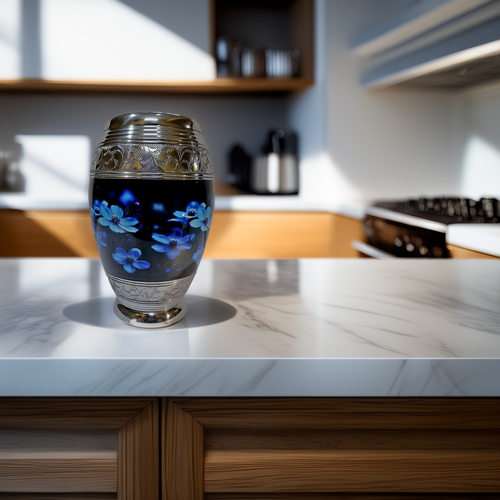
Keeping ashes in a memorial urn at home is one of the most common choices. A beautiful urn placed on a mantel, shelf, or in a dedicated memorial space becomes a lasting and comforting presence in daily life. It allows family members to feel close to the person they've lost, in their own time and in their own way. Urns for ashes come in a wide range of materials and styles, from carved wood and hand-painted ceramic to polished metal and natural stone, so it's possible to find something that truly reflects the person being remembered.
Placement in a columbarium niche offers a more formal setting. A columbarium is a dedicated structure, often found within a cemetery, chapel, or memorial garden, where urns are housed in individual niches. It creates a permanent, accessible place where family and friends can visit and pay their respects over the years. Many niches can be personalised with small plaques or photographs. You can find more detail on these endless possibilities for cremated remains through funeral guidance resources.
Scattering ashes in a place that held meaning, whether at sea, in a garden, on a mountain, or beside a favourite tree, is a deeply symbolic choice. It speaks to the idea of return: to nature, to a beloved landscape, to something larger than ourselves. Local regulations vary depending on location, so it's worth checking with local authorities before making arrangements.
Sharing ashes among family members is another gentle and practical option. Keepsake urns hold a small portion of ashes, allowing several people to each have a personal memorial. Memorial jewellery, such as pendants or rings that hold a tiny amount of cremated remains, offers a quiet and wearable way to keep someone close. Resources like meaningful ways families can honour loved ones after cremation explore this beautifully.
Eco-friendly alternatives are growing in both availability and popularity. Biodegradable urns dissolve naturally in soil or water, tree burial systems allow a living memorial to grow in someone's memory, and aquamation (also called water cremation) offers a gentler, lower-emission process as an alternative to flame cremation. Around 65% of consumers now express interest in greener memorial options, reflecting a meaningful cultural shift.
Whatever path feels right, there is no pressure to decide immediately. Many families use a combination of these approaches, each one a quiet way of saying: you are remembered.
How to Choose an Urn for Ashes
If you're thinking about choosing an urn for ashes, it helps to know that there are really only a few practical things to consider. Start with those, and everything else will begin to feel more manageable.
Getting the Size Right
The most widely used sizing guideline is straightforward: allow approximately 1 cubic inch of urn capacity for every pound of your loved one's pre-cremation body weight. So for someone who weighed around 150 pounds, you would look for an urn with a capacity of roughly 150 cubic inches. Most standard adult urns are designed with a capacity of 200 cubic inches or more, which comfortably accommodates the majority of adults with a little room to spare. If you're unsure of the exact weight, erring on the slightly larger side is always a sensible approach. You can also ask the crematorium for the volume of the temporary container they've provided, which gives you a helpful reference point.
Understanding Urn Materials
The material an urn is made from shapes how it looks, how it feels, and how well it suits your intended use.
Wood urns offer a warm, natural quality that many families find comforting. They work beautifully as a home display piece and can be personalised with engraving. They're best kept in a stable indoor environment, away from direct sunlight or damp conditions.
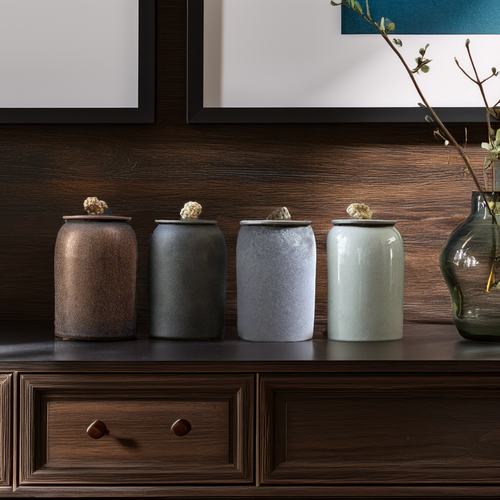
Ceramic urns allow for intricate colours, glazes, and artistic designs. They can be genuinely beautiful objects. Because ceramic is more fragile than other materials, they're best suited to a protected space where they won't be knocked or bumped.
Metal urns, including brass, bronze, and stainless steel, are among the most durable options available. They tend to have secure threaded closures, making them a practical choice for households with young children or pets, as well as for placement in a columbarium niche.
Glass urns have a luminous, contemporary quality and can be genuinely striking as memorial pieces. Like ceramic, they're best suited to protected indoor display.
Biodegradable urns, made from materials like bamboo, recycled paper, or natural composites, are designed to return gently to the earth. They're a thoughtful choice if you're planning a burial at sea, a garden burial, or a scattering ceremony. Around 65% of consumers now express interest in eco-friendly options, reflecting how meaningful this choice has become for many families.
Design and Style
Urns for ashes are available in a wide range of styles, and there truly is something to suit every personality and every home. Traditional and religious designs often feature classic shapes alongside meaningful symbols such as crosses, angels, or faith-based motifs. Modern minimalist urns lean toward clean lines and neutral tones, blending quietly into a living space without drawing attention. Decorative styles, including nature-inspired motifs like butterflies, waves, or hearts, allow the urn to reflect something specific and personal about the person being remembered. Many families find that choosing a design which feels connected to their loved one's personality makes the selection process feel less overwhelming and more meaningful.
Keepsake Urns for Sharing
When several family members wish to keep a portion of their loved one's ashes, keepsake urns offer a gentle and practical solution. These smaller urns hold just a modest portion of the cremated remains, allowing each person to have their own private memorial. When choosing keepsakes, it's worth thinking about how many are needed, what material will suit each person's circumstances, and whether engraving (a name, a date, or a short phrase) would add something meaningful. Secure closures are worth looking for, as they make the process of transferring ashes feel respectful and unhurried. You might also consider comprehensive guidance on choosing the right cremation urn to help you think through the options at your own pace.
There Is No Single Right Answer
Choosing an urn is one of the most personal decisions in this entire process, and it's worth saying clearly: there is no wrong choice here. Many families keep a loved one's remains in the temporary container from the crematorium for weeks or even months while they take time to decide. What matters most is that the choice feels right for you, and for the way you want to honour and remember the person you've lost.
Memorial Jewellery and Keepsakes for Ashes
For many families, the question of how to keep a loved one close doesn't end with choosing an urn. Memorial jewellery offers something quietly different: a way to carry a small portion of cremated remains on your body, each and every day. These pieces typically feature a small, sealed internal compartment, carefully designed to hold just a symbolic amount of ashes. The remains stay secure, the piece stays discreet, and the connection stays constant.
Common Forms of Memorial Jewellery
The most popular form is the pendant or necklace, which comes in a wide range of shapes including hearts, teardrops, and cylindrical tubes, many of which can be engraved with a name, date, or short message. Rings offer another deeply personal option, often featuring a small hidden chamber or ashes fused into a glass or resin element. Bracelets are also available, either as cuffs with a fillable section or charm-style pieces incorporating small urn beads. Most memorial jewellery is crafted from sterling silver, stainless steel, or gold, and is built to be worn daily with care and confidence.
Keepsake and Sharing Urns
Not every family wants a single urn in a single location. Keepsake urns, sometimes called sharing urns or mini urns, are smaller vessels designed to hold just a portion of the remains. They make it possible for several family members, perhaps children, siblings, or close friends living in different places, to each have something of their own. One person might display a full-size urn at home, while others keep a small keepsake nearby. There is no hierarchy in this; each piece holds equal meaning.
Why This Matters
There is something quietly powerful about holding a tangible reminder of someone you love. Research suggests that around 45% of families now show interest in personalised memorial products, reflecting how deeply people want memorials that feel individual rather than generic. Carrying or keeping something that was chosen specifically for your loved one, something that reflects who they were, can offer a small but steady sense of comfort during an incredibly difficult time. It is not about replacing anything. It is simply about staying connected in a way that feels right for you.
Finding Your Own Way to Remember
There is no single correct way to honour someone you love. Every family is different, every relationship is unique, and what feels meaningful to one person may feel entirely wrong for another. That is not just acceptable — it is exactly how it should be.
If you need time before making any decisions, that time is yours to take. Grief affects our ability to think clearly, and there is no deadline that matters more than your own readiness. Many families find it helpful to simply sit with their feelings for a while before choosing how to proceed.
Urns, keepsakes, and memorial jewellery are tools for remembrance, not obligations. They exist to support you, not to define what a "proper" tribute looks like. Some families choose several options; others choose none at all and focus on rituals, stories, or shared experiences instead. Grief and decision-making support is available if you find the weight of these choices feeling heavy.
Please explore everything at your own pace, without pressure. There is no rush, and reputable guidance is available through resources like the Cremation Association of North America whenever you feel ready.
Making these decisions while carrying grief takes real courage. Be gentle with yourself. Whatever path you choose, it is an act of love.
Conclusion
Grief is deeply personal, and so is the way we choose to honour those we love. Throughout this guide, we have explored the timeless meaning behind "ashes to ashes," the spiritual and cultural significance it carries, and the many thoughtful ways families are finding comfort in how they care for a loved one's remains.
The most important takeaways are simple. Words and rituals carry real meaning. Your choices do not have to follow a set path. And honouring someone's memory should feel true to who they were.
You deserve support that is compassionate, clear, and free from pressure. If you are ready to explore your options or simply want to talk things through, we are here to help. Reach out to our team today and take the next step with confidence, knowing that every decision you make is an act of love.